Structures · Mounting design
Wing Mounts & Structural Reinforcement
Rear-wing attachment trade studies and structural improvements addressing fatigue, lateral motion, and competition requirements.
Overview
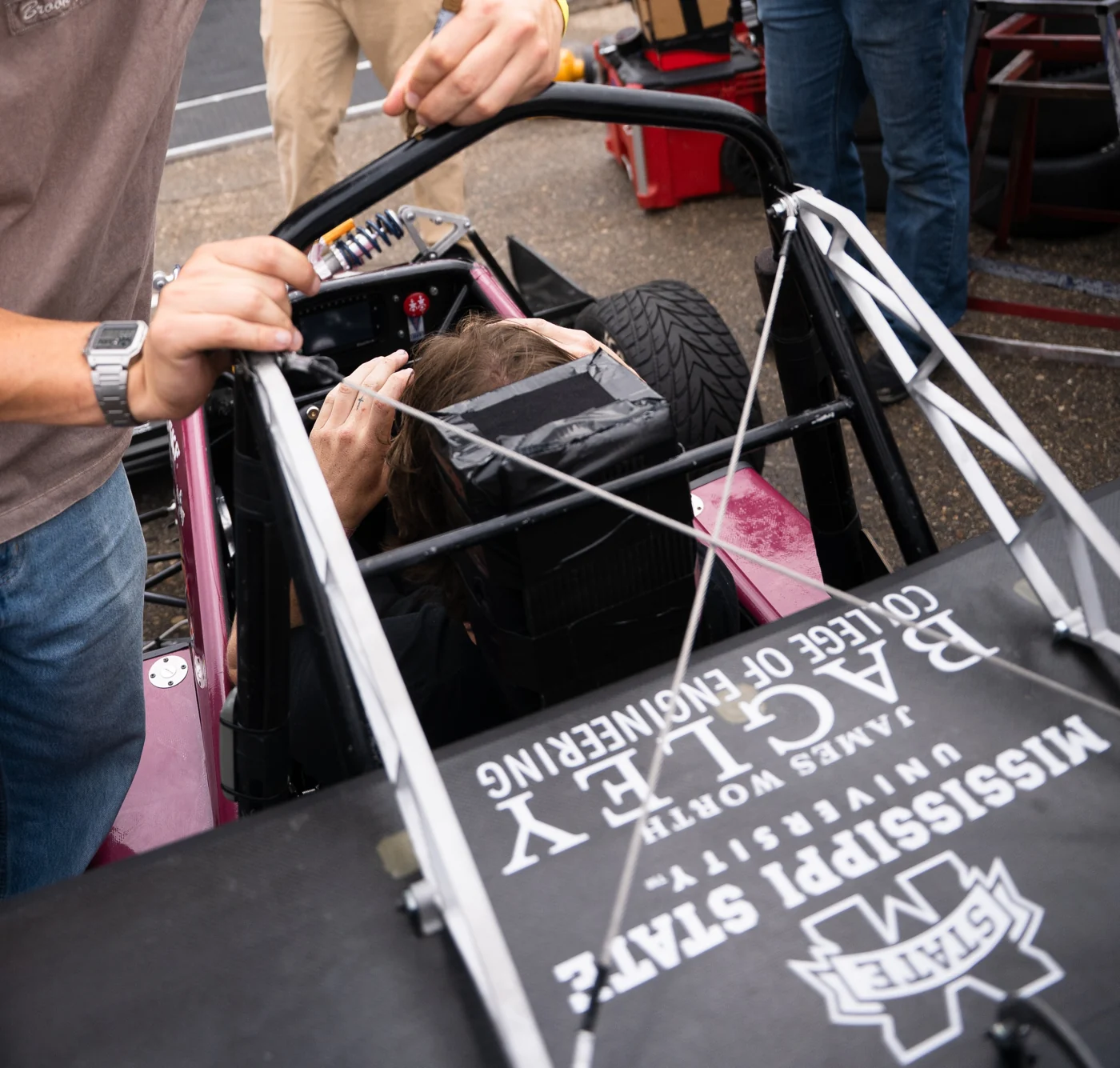
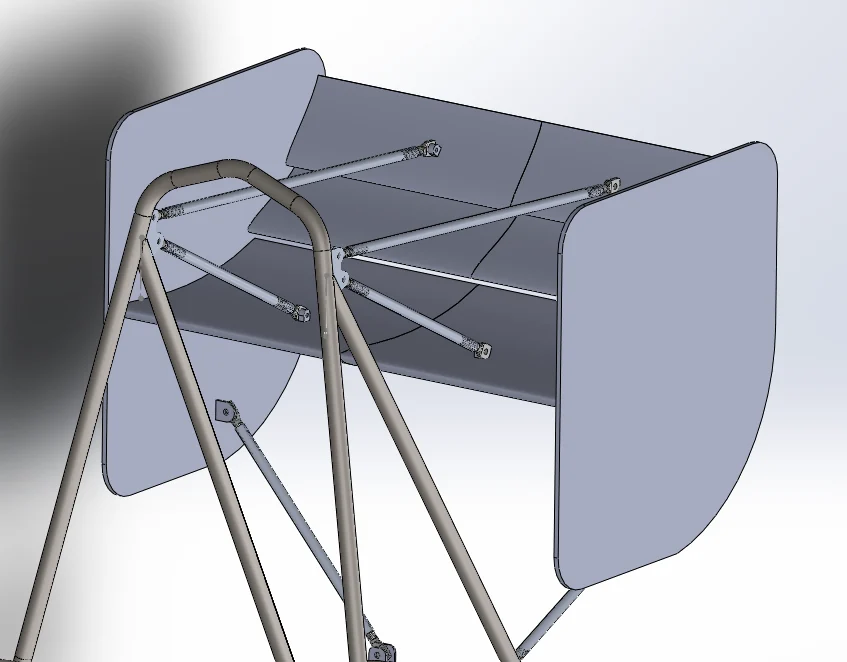
Rear-wing mounting failures required greater rigidity while accommodating attachment requirements intended to protect the roll structure. I compared pivot and rigid attachments through hand calculations and reviewed teammates’ FEA; Kinsly Burelson developed the mount design. The selected arrangement combined pivot bolts, lower support rods, crossed cables, and larger double-shear chassis tabs, and remained visibly stable in practice. The research-based 2.5 factor of safety was a design target, not a verified achieved margin. Complete calculations, FEA records, and the applicable SES evidence still need to be recovered or documented.
My Contribution
I performed hand calculations comparing one pivot bolt per truss with a rigid two-bolt attachment per truss, including the brass-bolt tradeoff. I reviewed teammates’ FEA and mounting concepts against a research-based 2.5 factor-of-safety design target; other members performed the FEA. Kinsly Burelson developed the mount design. The retained calculations and team FEA records are incomplete.
Engineering Approach
The rigid option used four bolts total and raised questions about demonstrating the required release behavior with low-strength fasteners. Brass bolts were considered but created concern about operating-load reliability. The team selected two pivot bolts total; the lower support rods resist aerodynamic rotation and crossed cables add lateral stiffness. Larger double-shear tabs replaced the thin single-shear arrangement.
Results & Current Status
The completed mounts remained visibly stable in vehicle practice. The team used a research-based 2.5 factor-of-safety design target in its FEA/design process. The retained evidence does not confirm the achieved margin or trace the target to its original source. This target was not a mandated competition rule. The team’s SES submission and inspection record remain necessary to substantiate compliance.
Attachment Trade and Rule Context
SAE’s published clarification for external items explains why a single fastener at a main-hoop-brace node differs from multiple-fastener or mid-span attachments: the latter require low-strength fasteners and additional bracing through the SES process. That supports the team’s attachment trade; it does not establish compliance for every pivot location or waive structural review.
Reference: SAE FAQ 279, External Items . The applicable season rules and submitted Structural Equivalency Spreadsheet remain the governing design records.
Team Credits
Rear mounting design: Kinsly Burelson. Attachment hand calculations, team FEA review, and design-trade review: David Stout. FEA execution: other aerodynamics members. Preliminary structural-target research: Mathew Saffle. Front-mount design: Mathew Saffle and Kinsly Burelson.
Next Steps
Project Images